Best Programming Books for Beginners - 5 Books That Will Change How You Learn Programming
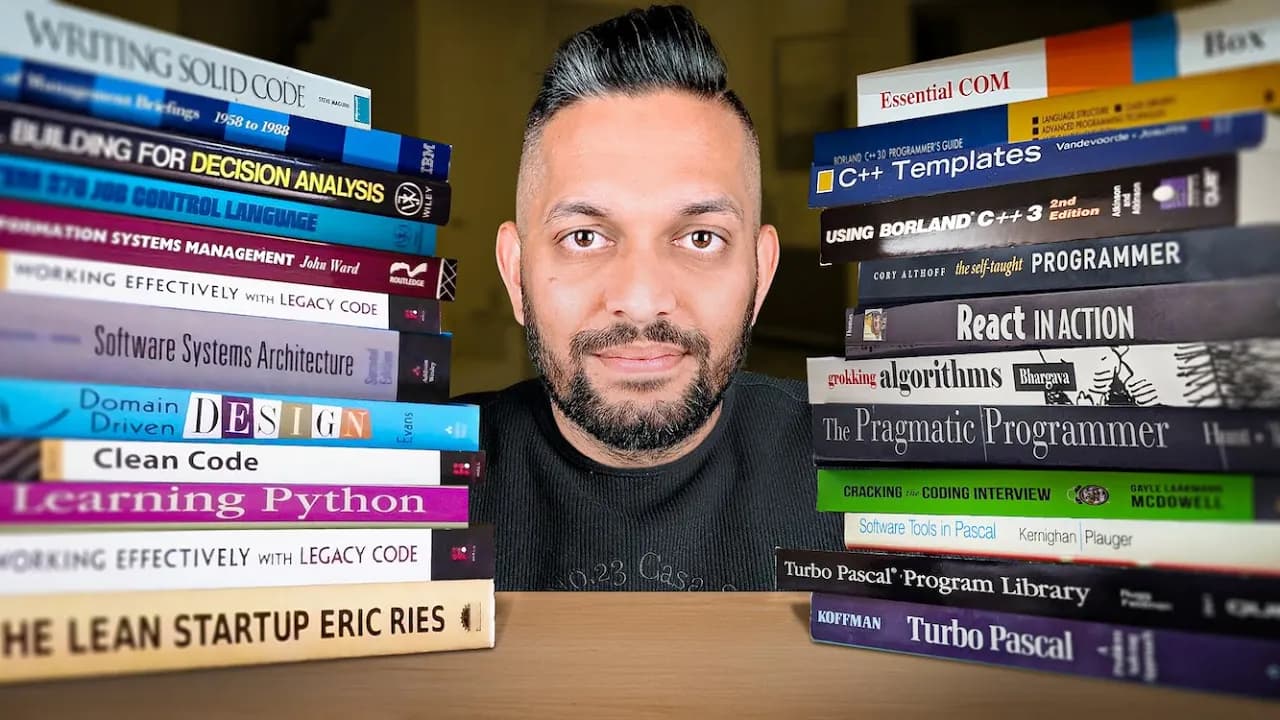
If you want fast results, you can watch a tutorial. If you want depth that sticks - the kind of depth that shows up when you are alone with a problem at 2 AM and no video exists for your exact bug - you read. This is my complete breakdown of why books beat tutorials for becoming a real developer, plus the five practical books I recommend to get started, with projects, mindset shifts, and links to video help when you need it.
"The man who does not read has no advantage over the man who cannot read."
That line hits hard because it’s true. If you ignore reading, you quietly throw away your biggest edge. Let me show you how to build that edge, step by step, with books that take you from writing your first lines of Python to designing systems that handle thousands of requests at the same time.
Why Books Beat Tutorials For Programmers
Learning programming with an online tutorial is like taking a picture. You click and that’s the end of it. You get a snapshot of knowledge, a single frozen moment that feels good because it’s quick. You can follow along, you can see something on the screen that looks right, and you get that instant hit of progress. But when the camera turns off and you face a slightly different problem, that snapshot stops helping.
Learning to program with books is like creating a beautiful painting. You layer and layer on it and keep doing it for weeks. You revisit sections, adjust strokes, mix new colors, and step back to see how the composition is forming. You might still have the same image in the end - a web app, a game, a script - but there’s going to be a depth to it that you can feel. There is texture in your decisions, nuance in your naming, and clarity in your thinking because you built the picture one thoughtful layer at a time.
I know we live in a world where everyone wants fast results. Watching a 10 minute video that promises a full-stack app in an afternoon is tempting. It feels like the easiest way to learn programming because you can press play and copy exactly what you see. But the quality of outcomes you get with books cannot be matched by online tutorials. Books force you to think, to fill the mental gaps, to pause and try, to re-read and really understand.
You can go much deeper with books than you can by using any other way. The depth shows up when you need to make decisions with trade-offs, when the docs are vague, when the error message is useless, and when the problem is not the same as the one in a video. This is the kind of depth that makes people trust you with real systems and real users.
Plus, on an actual job, you will not have any video tutorials to help you. You will have to read the documentation and implement things by yourself. Picture your first week at a new job - your laptop is fresh, the repository is huge, and there is no 20 minute video that explains the exact checkout service written by your team five years ago. What you do have is documentation, code comments, API contracts, and tickets with requirements. You read, you trace, you test, and you implement. That muscle is built by reading, not by pausing a video every 8 seconds.
So building a habit to read and understand technical stuff is a must to have a good career as a programmer. Reading is not just decoding words. It is learning to think with precision, to hold complex models in your head, to navigate ambiguity with confidence. That is why I am giving you five practical books to get started with. For some of the books, I will also provide links to YouTube videos that you can watch in case you get stuck. Let’s do this.
Book 1 - Python Crash Course: Learn Python By Building Cool Projects
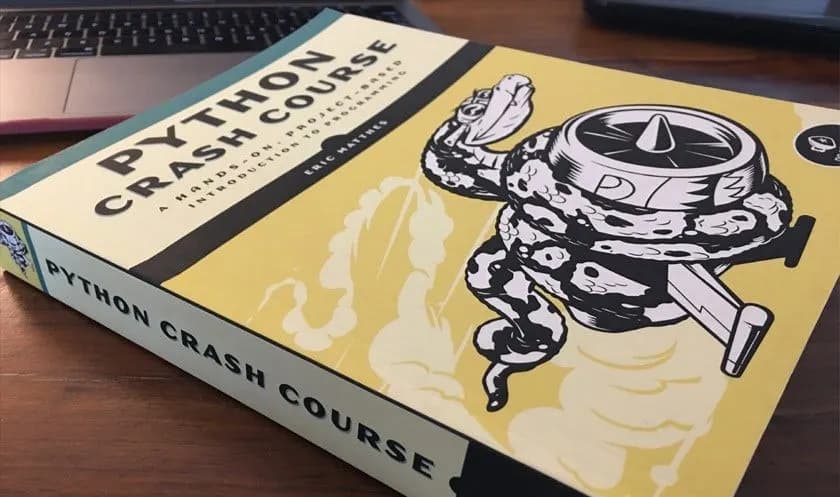
If you want to learn Python by building cool projects, check out this book called Python Crash Course. It is designed to take you from zero to actually shipping things you can show other people. The tone is friendly, the pace is steady, and the projects are fun enough that you will want to keep going. That matters. Motivation is fuel, and this book keeps the tank full.
Part 1 - The Basics That Pay Off Forever
The first half of the book deals with basics like variables, conditionals, loops, and functions. You learn the building blocks that show up everywhere - the way you store values, the way your program makes decisions, the way you repeat work without copying code, and the way you package behavior in functions so your code stays clean. These are not just Python basics. They are the foundations of programming that will keep paying off whether you move to data science, web backends, or scripting to automate your laptop.
As you move through these concepts, the book constantly asks you to write small snippets. That friction - fingers on keyboard, code on screen - is where learning sticks. When you write a loop and make it off-by-one, you will fix it and remember why. When you name a function poorly and confuse yourself, you will rename it and feel how clarity helps. These tiny wins compound quickly.
Part 2 - Projects That Make Python Real
The real magic happens in the second part of the book where you build projects. This is where Python stops being abstract and starts becoming useful. You move from reading about things to making things. You will feel the difference immediately, because now there is a goal - something you can run, click, see, and share.
Project 1 - Alien Invasion Game With Pygame
You will be using the Pygame package to build an Alien Invasion game. How does that sound? For your first project, you will be able to shoot down the alien fleet and also have a scoreboard to list the high scores. Pygame gives you the building blocks for drawing sprites, handling keyboard events, tracking collisions, and updating the screen at a steady frame rate. You will learn to represent the ship as an object, the bullets as objects, and the alien fleet as a pattern you can generate and update.
Imagine it on screen: a dark space background, a ship sliding at the bottom with arrow keys, bullets streaking up, and waves of aliens drifting left and right. When a bullet hits an alien, it disappears with a crisp update and the score jumps. That scoreboard in the corner is not just UI - it is a lesson in state, persistence, and feedback. You will also feel how structuring your code cleanly makes future changes simple, like adjusting speed, adding levels, or saving the highest score so it shows up next time you run the game.
Project 2 - Working With APIs And Visualizing Data
In the second project, you will learn how to work with APIs. You will download some data from the GitHub API and visualize it using the matplotlib library. If you have never called an API before, this is your perfect first taste. You will learn that an API is a contract - you send a request, you get structured data back, usually as JSON. Then you parse it, extract what matters, and turn it into a picture that tells a story.
Picture this: you fetch the most-starred repositories for a language, then build a bar chart where each bar is a repository and the height is the star count. Now you can see trends. Which projects are exploding. How open-source shifts over time. In the process, you will learn about HTTP requests, status codes, authentication when needed, pagination, error handling, and the tiny details that make a script robust instead of brittle. With matplotlib, you will pick colors, labels, titles, and ticks - all the small formatting choices that make a chart readable to someone other than you.
Project 3 - A Web App With Django, Styled With Bootstrap, Deployed To The Cloud
In the last project, you will build a web app using Django, which is a very popular Python web framework. You will also learn how to style your app using Bootstrap, which is a very popular CSS framework. At the end, you will deploy your website to the cloud to make it available for the entire world to see. This progression teaches you exactly how real apps get made - models to define data, views to handle requests, templates to render HTML, forms to accept user input, and migrations to evolve your database over time.
With Bootstrap, you will see how a decent layout appears quickly with responsive grids, buttons, navbars, and forms that look good without you drowning in CSS. Then deployment bridges the last hard gap - moving from localhost to a URL your friends can open on their phones. You will touch environment variables, dependency freezes, static files, and configuration that separates development from production. That last mile is where so many tutorial projects stop. This one takes you there.
After completing this book, you will feel confident enough to build your own Python projects. That confidence is not fake hype - it comes from shipping three distinct things, each with different skills: a game loop, a data script, and a web app. You will know where to look in docs, how to break a problem down, and how to keep going when something new appears on the screen.
Book 2 - Eloquent JavaScript: Deep Understanding Of JS In The Browser And On The Server
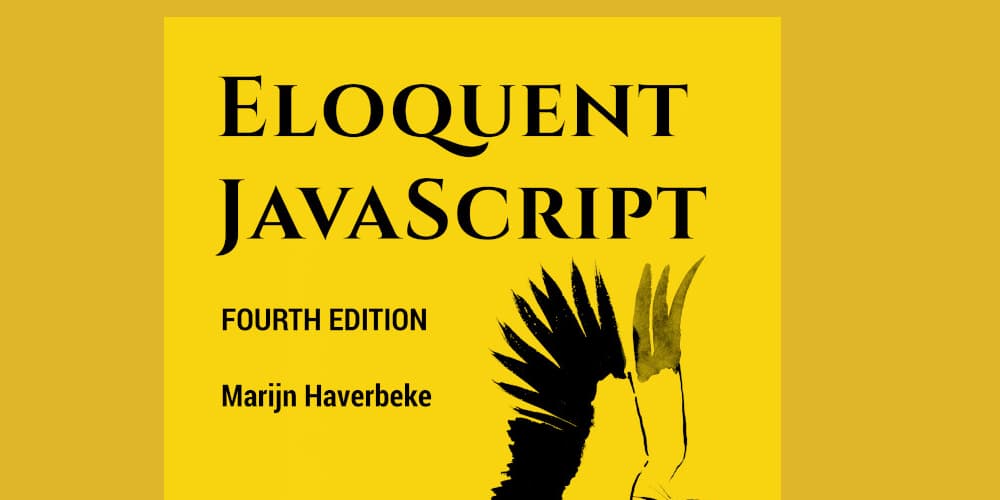
Next, I have a great recommendation for all the web development folks out there. If you want to have a deep understanding of JavaScript, try this book called Eloquent JavaScript. It is available online legally for free, and the best part is that you can try out all the exercises in this book on the same website. No setup hurdles. You open the page, type, run, and see results immediately. That event loop, that closure, that prototype chain - they stop being buzzwords and become tools you can wield.
When a book lets you execute code right there on the page, it lowers the friction to practice. Every new idea can be tried instantly. You can modify examples, break them, and fix them without switching windows. That tight feedback loop is exactly how you build intuition in JavaScript, where small details often have big consequences.
Part 1 - The JavaScript Fundamentals You Will Actually Use
In the first part of the book, you will learn the basics of JavaScript. This starts with values, types, variables, and expressions, then moves into control flow, functions, and data structures like arrays and objects. You will also learn how JavaScript treats functions as first-class values, how scope works, and why higher-order functions are powerful. These are the core ideas that show up in every modern JavaScript codebase, from a tiny site to a big React app to a Node.js backend.
Because the book is interactive, you will feel the behavior of weird edges in JavaScript - like truthiness, coercion, and how this behaves depending on how a function is called. Those are the gotchas that break code at 5 PM on Fridays. Better to learn them in a sandbox with short, focused exercises.
Part 2 - The Browser, The DOM, And How JS Talks To The Page
In the second part, you will learn about how JavaScript interacts with the browser and the Document Object Model - the DOM. The DOM is a tree representation of your HTML. JavaScript can read it, modify it, listen to events from it, and update it in response to user actions. That means you can make pages that react to clicks, keystrokes, timeouts, and network responses.
Watch how a script grabs a node with query selectors, changes text, toggles classes, and injects new elements. Then layer in events - click, input, submit - and manage state so the page stays in sync with your data. This is the foundation behind frameworks too. When you understand these mechanics by hand, you will write better React, Vue, or Svelte because you will know what is happening under the hood.
Part 3 - Running JavaScript On The Server
Finally, in the last part, you will learn about how to run JavaScript on the server instead of the browser. This is where Node.js comes in - a runtime that lets you execute JS outside the browser. You will build scripts that touch the file system, create an HTTP server, and respond to incoming requests. Suddenly JavaScript is not just a language for buttons and forms. It is a language for services, APIs, and command line tools too.
Every chapter gives you exercises to test your knowledge. These are not throwaway drills. They force you to think, to compose multiple ideas, and to get stuck in ways that teach you how to get unstuck. That skill is priceless in JavaScript, where asynchronous behavior, promises, and data flow can tangle you up if you only ever copy code from a video.
Projects You Will Build In Eloquent JavaScript
Build a brand new programming language called Egg. You will design its syntax, parse it, and interpret it. That means you will write a tokenizer that turns raw text into tokens, a parser that turns tokens into an abstract syntax tree, and an evaluator that walks the tree to execute code. This is not just a fun exercise - it demystifies how languages work, how expressions are evaluated, and why compilers and interpreters are not magic. You will feel how scope and environment maps are implemented for real.
Make a web app to edit pixel art. You will build an editor grid where each cell can be colored. Think retro game sprites. You will learn how to render efficiently, how to respond to mouse events, how to store your drawing, and how to add simple tools like pickers and undo. This project blends DOM manipulation with user interface design and gives you a taste of state management that exists in every front-end app you will ever write.
Build a website that lets people organize meetings to share their skills with each other. You will implement features like creating a meeting, listing them, signing up, and coordinating times and topics. On the backend, you will handle routes, methods, and data persistence. On the front end, you will fetch data, render lists, and deal with forms. This is a mini full-stack app that mirrors how real community tools work.
Unfortunately, there is no video guide on YouTube that covers the entire book. I will link a playlist that covers the first six chapters of the book: Eloquent JavaScript . If enough people go and support the creator of the playlist, I am hoping that he will complete the book. That is how good content gets finished - when people show up, comment, like, and say this helped. If you start the book and find the playlist useful, go boost it so the rest gets made.
Book 3 - The Pragmatic Programmer: Timeless Principles That Make You Effective
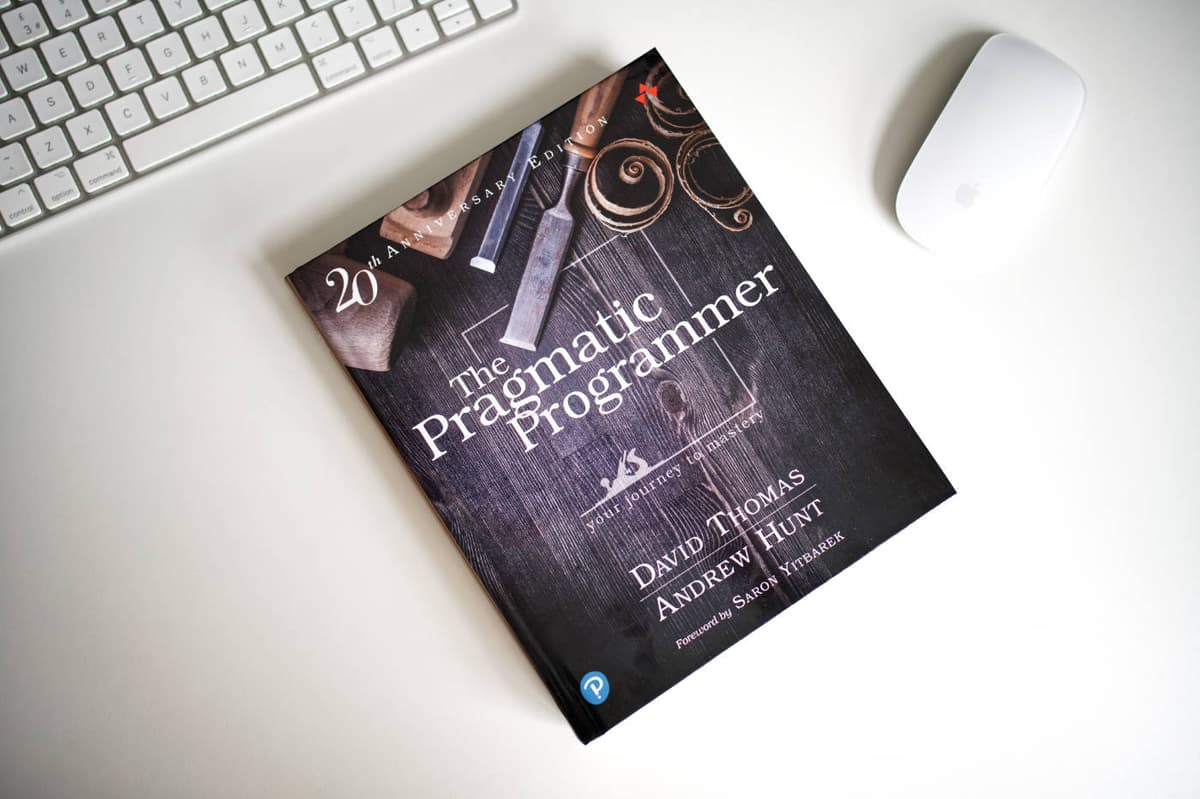
Next we have a timeless classic, The Pragmatic Programmer. The principles presented in this book are not tied to any particular technology or programming language. This makes them applicable even though the book was published long time back in 1999. The ideas have aged well because they address how developers think, how teams work, and how software evolves over time. That does not go out of style.
The Pragmatic Programmer covers topics like debugging, testing, automation, and communication, providing a well rounded perspective on what it takes to become an effective software developer. It focuses on fundamental principles and what actually works that can be applied in any programming context. You will find habits and checklists you can use the same day, plus mental models that quietly improve your judgment for years.
Metaphors And Analogies That Make Ideas Stick
The best part about this book is the clever metaphors and analogies it uses to explain complex technical concepts. Metaphors cut through noise. They give your brain a hook. You will read about broken windows - how leaving tiny defects signals that sloppiness is okay and invites more decay. You will see tracer bullets - building thin vertical slices to find your target quickly. You will learn about stone soup - getting momentum by shipping a small useful thing and adding ingredients as you go. These images teach you to act, not just to know.
Code Kata - Practice Like An Athlete
For example, the book proposes the idea of code kata. The word kata means form in Japanese and is often used to describe repetition of certain motions in karate to reinforce learnings. That image matters. A martial artist does not learn a punch by watching a video. They repeat the form until the movement becomes natural. By doing code kata exercises, programmers can also reinforce their knowledge of algorithms, data structures, and design patterns.
Pick a small problem. Write it cleanly. Rewrite it with a different constraint. Time yourself. Review your naming. These repetitions make you faster and calmer in real work. When a tricky bug shows up, your hands already know what to try. The kata mindset also makes you curious - you start collecting small challenges and solving them in multiple ways just for fun. That is how craft develops.
Why It Is A Must Read At Any Level
Whether you are a beginner or an experienced programmer, this book has something for everyone. Beginners get a foundation of habits that prevent painful mistakes. Experienced developers get language to explain their instincts and tools to level up their influence on a team. This makes it a must read for anyone who is serious about honing their craft as a programmer.
Book 4 - Clean Code by Uncle Bob: Write Code People Actually Enjoy Reading
So you have learnt a couple of programming languages and have now become a pragmatic programmer. Next, you need to know how to write clean code. For that we have another classic, Clean Code by Uncle Bob. Robert C. Martin - Uncle Bob - writes with strong opinions, sharp examples, and a deep love for code that reads like prose. That energy will rub off on you, and your codebase will thank you.
The primary goal of Clean Code is to improve readability and maintainability of your code. It teaches you how to write code that is easy for other developers to understand, modify, and extend. This is not about cleverness. It is about kindness to your future self and to your teammates. When code reads cleanly, bugs are easier to spot, changes are safer to make, and features arrive faster.
Comments, Names, And Functions That Tell The Truth
Clean Code also tells you when and when not to use comments. It encourages developers to write self explanatory code instead of relying heavily on comments. That means choosing names that carry meaning, extracting functions that reveal intent, and organizing classes so their responsibilities are obvious. Comments still matter, especially for rationale and non-obvious constraints, but the code itself should be the clearest explanation of what is happening.
It also covers how to name your variables, functions, and classes. Good names reduce the mental load on every reader. They let your brain focus on the problem, not on decoding. Short but specific, consistent but flexible - the book gives you patterns and anti-patterns that you can apply the same day. You will start renaming things without being asked because you can feel how much it helps.
Examples In Java - Ideas For Every Language
The book uses real world examples to drive the point home. Uncle Bob provides code snippets in Java, but you can easily apply the ideas to other languages. A small function in Python still benefits from a clear name and a single responsibility. A JavaScript module is easier to test when it avoids side effects. A Go package reads better when files are organized by behavior instead of arbitrary folders. The language changes. The principles travel.
Design Principles You Will Use Daily
The book also covers design principles like the single responsibility principle and DRY - don’t repeat yourself. Single responsibility means a function or class should have one reason to change. DRY means duplication is a hidden cost that grows over time. When you follow these ideas, your code naturally becomes easier to test, safer to refactor, and simpler to extend. You will feel bugs shrink because fewer places need to change for any given feature.
The book does become a little opinionated at times, so you do not have to follow everything to a tee. Context matters. Constraints matter. But it is still a great starting point to improve the quality of your code. Treat it like a strong mentor - listen carefully, try the advice, and adjust to your team’s reality.
Book 5 - Designing Data-Intensive Applications: Think Like A Systems Architect
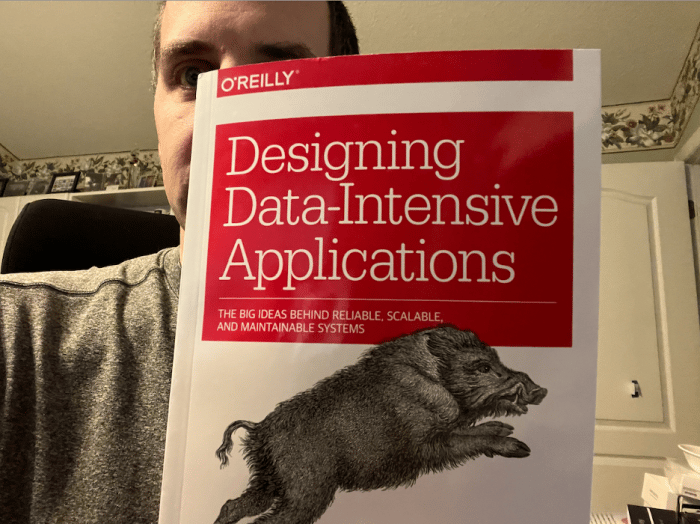
If you want to go from junior developer to senior developer, you have to start thinking beyond code. You need to know how to architect your services in a way that they can handle thousands of simultaneous requests at the same time. For that, you should read Designing Data-Intensive Applications - DDIA for short. This book will widen your thinking the way a mountain view widens your sense of distance. Problems that looked big will look smaller when you know the landscape.
This book introduces you to different challenges involved in building systems that are reliable, scalable, and maintainable. Reliability is about staying up and keeping data safe even when hardware fails or networks misbehave. Scalability is about keeping performance acceptable as load grows 10x or 100x. Maintainability is about building systems humans can actually understand and evolve over years. DDIA breaks these big words down into concrete patterns you can recognize in your daily work.
Choosing Storage - Relational vs NoSQL
You will learn when to use relational databases versus NoSQL databases. Relational databases give you strong consistency, transactions, and the power of SQL for complex queries. They shine when your data has clear relationships and you need correctness guarantees. NoSQL databases offer flexible schemas, easy horizontal scaling, and models like key-value, document, and columnar storage. They shine when your access patterns are simple, your data varies by record, or your write volume is huge.
DDIA will also help you understand how databases efficiently store and fetch data. You will read about indexing, caching, and storage engines like B-trees and LSM trees that trade write speed for read patterns in specific ways. You will see why an index speeds up reads but slows down writes, and how to decide what to index. These details matter when one slow query starts hurting a whole service.
Scaling Out - Replication, Sharding, And Distribution
It will also teach you how to distribute your data to multiple machines if your data becomes too large to fit in one machine. That means replication for availability, sharding for scale, and careful strategies for dealing with network partitions. You will learn the costs and benefits of each approach - lower latency here, higher complexity there - and how to reason about consistency models like eventual consistency in a way that helps you make good trade-offs.
When you split data across machines, failures are normal. So DDIA walks you through patterns for retries, idempotency, leader election, and consensus. It puts names to the problems you have felt in production without words for them. Then it shows how big systems address them so you do not have to reinvent everything the hard way.
From Theory To Practice - How Real Companies Do It
While the book covers a lot of theory, it also provides practical guidance on how to apply these concepts to a real world scenario. It does so by providing case studies on how big companies like Google and Amazon handle their data. You will read about ideas like Dynamo-style systems for highly available key-value storage and Bigtable-like models for wide-column storage that supports massive scale. Seeing these strategies in the wild gives you confidence to adapt them in your own context.
DDIA also covers emerging trends in data systems like new databases and storage technologies. That includes stream processing, event logs, and systems that blur the line between batch and real time. If you want to learn how to make common trade-offs when building large applications, DDIA is a great read. The book is dense in the best way. You can take one chapter to work, notice the patterns in your system, and start making improvements that matter.
Books For Depth - Courses For Speed
If you want to build a deeper understanding of concepts, books are a great way to do it. They push you beyond copying into thinking. They train the muscles you actually use at work - reading, designing, debugging, and making trade-offs under uncertainty. That is why these five books will make you better at your craft.
But if you are looking for fast results and prefer online courses, I have tried 50 programming courses. Watch this video to know the top five that I recommend. I did the legwork because I know time is limited and quality varies a lot. The top five are the ones that deliver value quickly without fluff. They are linked where you expect them to be.
Final Thoughts
You can learn to code with a click, like taking a picture, or you can learn to code like an artist paints - slowly at first, then with confidence, depth, and your own style. The five books above map a path: start with Python and make things, master JavaScript in the browser and on the server, sharpen your craft with pragmatic habits, clean up your code so others can thrive with you, and finally, think like a systems architect who can handle serious scale.
Continue With this article
Build the habit of reading. Use videos as a backup when you are stuck. Ship projects that you can show proudly. And keep going.
My name is Sahil and I will see you in the next one.